
In today’s journal entry, I’ll further explore the role of “concept designer.”
Among numerous game and animation companies, Game Science is my favorite. Its location (right in my hometown of Hang Zhou), art style, and reputation are all perfect fits for me. You can see that their concept art is top-notch and possesses a strong ancient Chinese oriental charm.
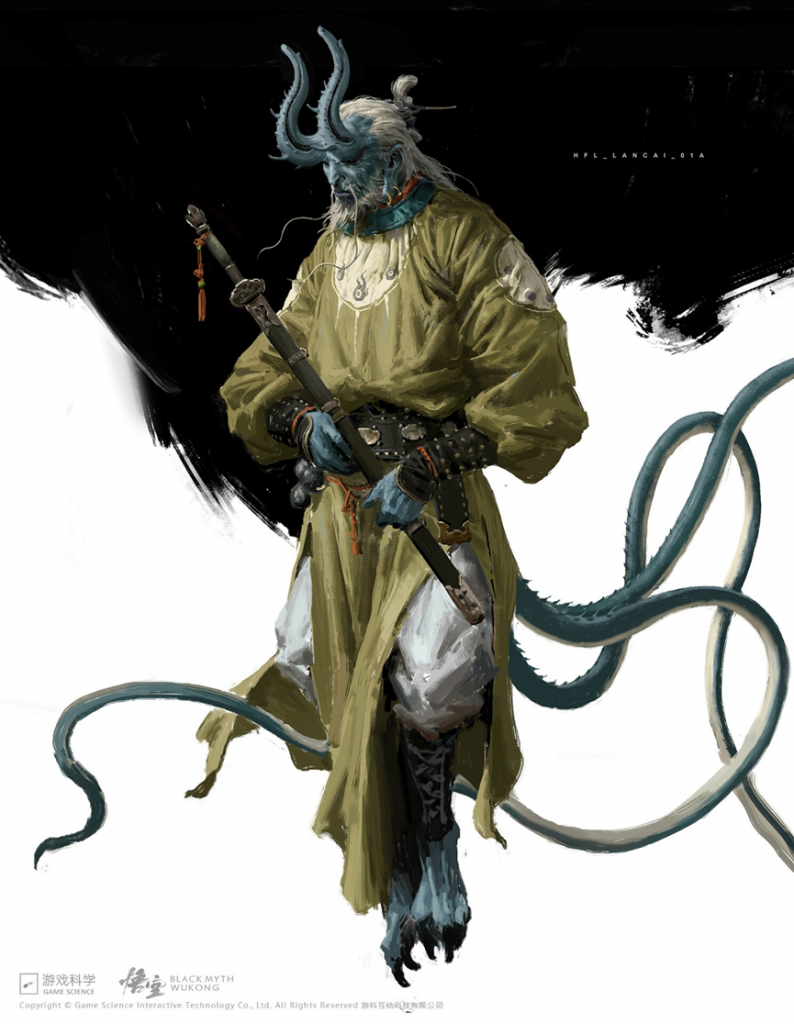
(yang-qi917‘’s artwork from Blackmyth-wukong-concept)
In Game Science, or most large game companies, the role of a concept artist differs from that of a 2D artist. The work of a concept artist tends to be more exploratory. I interviewed Leo Li, a concept artist from China, and asked him about the tasks involved in a concept artist’s work: “Concept artists often use sketches, collages, 3D model sketches, and other methods to capture the style, atmosphere, and character of the world.”
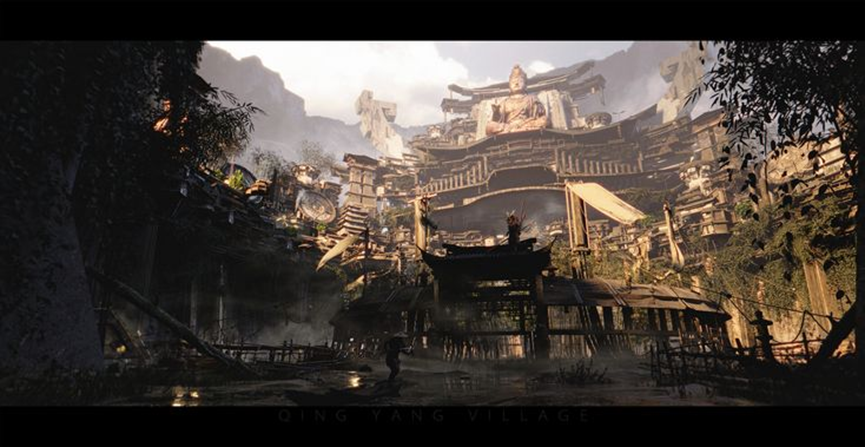
(Qing Yang Village, Leo Li from ArtStation)
The most crucial skill for concept artists in game development is their ability to guide or control the entire game’s art production and even its overall creation. Whether it’s a mobile game, PC game, or indie game, the initial concept design process is largely the same. Concept design explores style, defines the game’s world, atmosphere, and character design. This is followed by concretizing the initial concepts, creating reference images, models, and texture guides. Finally, these art assets are integrated into the game to make it functional. The goal of concept artists is to solve game design problems, such as the history, era, world, materials, and color scheme of a house within the game.
In short, concept artists need to create designs that are consistent with the project’s style and can be implemented. Their designs should allow the modelers to directly create the models without repeated communication. Most importantly, the concept artist’s aesthetic sense must be impeccable; they cannot produce generic, mass-produced designs from the outset.
Leave a Reply