
During the past two years of my postgraduate studies, I gradually developed from a transfer student with only a basic understanding of animation into someone who has gained a deeper understanding of character animation through systematic professional training. I began to realise that character animation is not only about using movement to portray a character, but also about performance and emotional communication, which are essential elements in bringing a character to life. Through projects such as the LIAF collaborative project in my first year, the one-minute personal film in my second year, and the development and production of my graduation film, I became increasingly aware of both my strengths and the areas in which I still need to improve.
Through this journal, I hope to reflect on the animation skills I have developed throughout my practice, particularly in character performance and visual storytelling. At the same time, the skills discussed in this journal will also help me gain a clearer understanding of my future professional direction within the animation industry.
Firstly, I would like to discuss one of the most important aspects of character animation — “performance.” Taking the LIAF collaborative project from the first year of my postgraduate studies as an example, I was involved in character design and 3D animation production, where I needed to present a character who appeared weak, hopeless, and exhausted to the audience. Through the performance-related classes provided by Central Saint Martins, I first researched the daily behaviours and overall appearance of people experiencing poverty and hunger in order to determine the visual direction of the character I wanted to create. In addition, by using the performance studio at CSM, I recorded myself acting as the character before beginning the animation process. While recording live-action references, I intentionally exaggerated my body language compared to real-life movement in order to create more expressive and comprehensive references for the animation.
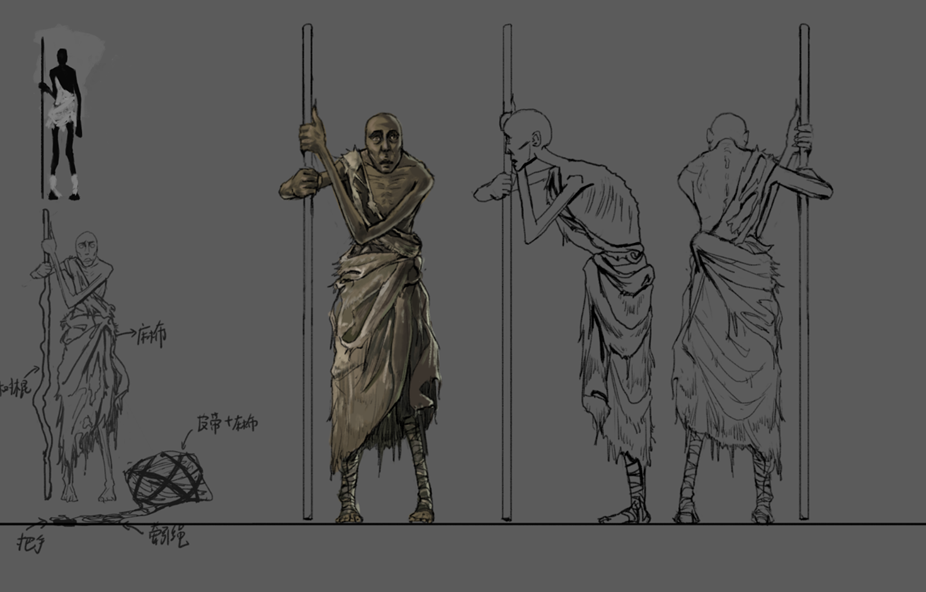
At the same time, this project also improved my teamwork skills. As a regular member of the production team, I needed to design characters that closely followed the director’s requirements, while also considering whether the colleagues responsible for modeling could clearly understand the character designs I created. Therefore, I added material notes and functional descriptions on top of my design work.
Next, I would like to talk about the first 1-minute individual project in my second year. As my first solo project, I faced some pressure at the beginning, such as how to construct a short film narrative and how to express emotional rhythm. Fortunately, I was able to resolve these challenges. Through this project, I gained a new understanding of the meaning of “performance” in character animation. During the production process, I realized that a character’s performance is not only conveyed through their own dialogue or physical movements; it can also be expressed through the surrounding environment and how the character’s actions resonate with it.
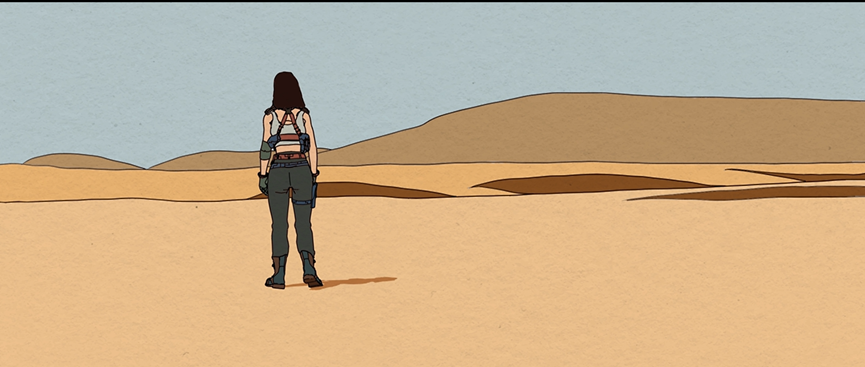
In my 1-minute personal animation short, in order to convey the character’s sense of loneliness and isolation, I chose to reduce the character’s presence in the frame and instead use a vast, empty desert to emphasize human insignificance and solitude.
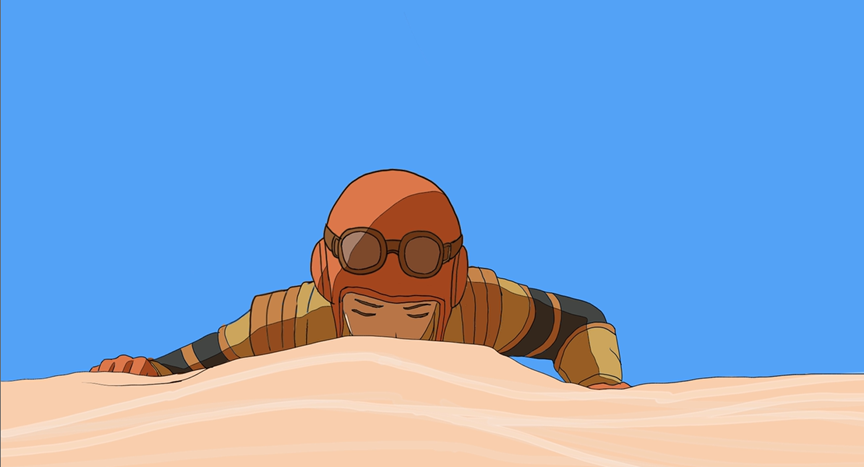
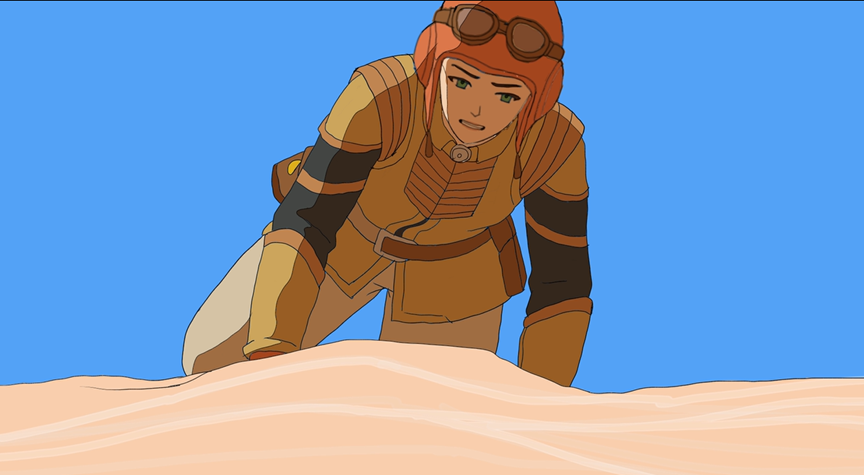
Through my graduation animated short film, I gained a more comprehensive understanding and improvement in character movement and performance. During production, one scene required me to depict a character weakly standing up and running southeast. This presented a significant challenge, requiring me to consider both the character’s physical performance and the composition. After careful consideration, I opted for a low-angle close-up shot, addressing the character’s composition and the distance between them and the audience. The closer, more intimate camera angle helped my character communicate with the audience, conveying a sense of pressure and tension. Simultaneously, this scene of the character getting up and running helped me understand how to convey emotions through a combination of facial expressions and physical movements. As the character struggled to stand, I added pauses to express their facial expressions; the interweaving of these expressions and movements helped the visuals “breathe”—creating a clear and accurate performance rhythm.
Through these projects, I’ve found that my interest in concept design, character performance, and emotional storytelling far outweighs my interest in simple motion production. I’m more focused on how characters can establish an emotional connection with the audience, and how my animation should convey emotions through camera angles, pacing, environment, and performance. These experiences have also clarified my future aspirations to pursue a career focused on character, scene, and pacing design. This largely leans towards pre-production animation design. I also believe my abilities can be well-developed within game art design.
However, through continuous practice, I’ve also realized that I still have many areas for improvement. For example, more professional use of camera language, smoother movements for complex characters, and more efficient communication with different roles within a team production process.
For me, character animation is not just about making a character move; it’s more about a way to connect emotionally with the audience through the character. The skills and experience I gained during my graduate studies have helped me gradually establish my own animation creation direction and future career goals.
Leave a Reply